
Toenail fungus — onychomycosis — is one of the most undertreated conditions in podiatric practice, not because patients don’t want to address it, but because the treatment options most people try first don’t work well enough to justify the effort. OTC topical antifungals have low cure rates (less than 20%) for established infections. Oral antifungals are effective but carry liver toxicity risks that make many patients and physicians hesitant. Laser treatment occupies a different position in this landscape: it targets the fungal organisms directly through the nail plate without systemic medication, without meaningful side effects, and without the compliance demands of a months-long topical regimen that may not clear the infection anyway.
Why Topical Antifungals Fail
The fundamental problem with topical antifungal treatments is penetration. Toenail fungus lives within and beneath the nail plate — a dense keratinized structure that most topical agents cannot penetrate in therapeutic concentrations. OTC products like clotrimazole and tolnaftate have essentially no efficacy against established onychomycosis because they never reach the infection site in sufficient concentration. Prescription topical antifungals — including ciclopirox and efinaconazole — have better nail penetration profiles, but even these produce mycologic cure rates well below those of oral therapy in clinical trials, particularly for moderate to severe nail involvement.
Patients who have been applying OTC antifungal polish or cream to thickened, discolored nails for months without improvement are not doing it wrong — they are using a tool that was never well-suited to the job.
How Laser Treatment Works
Laser treatment for onychomycosis uses specific wavelengths of light that pass through the nail plate and are absorbed by the pigmentation in the fungal organisms beneath and within it. The absorbed energy generates heat that damages the fungal cell structure, inhibiting growth and killing the organisms, without producing enough heat to damage the surrounding nail or skin tissue.
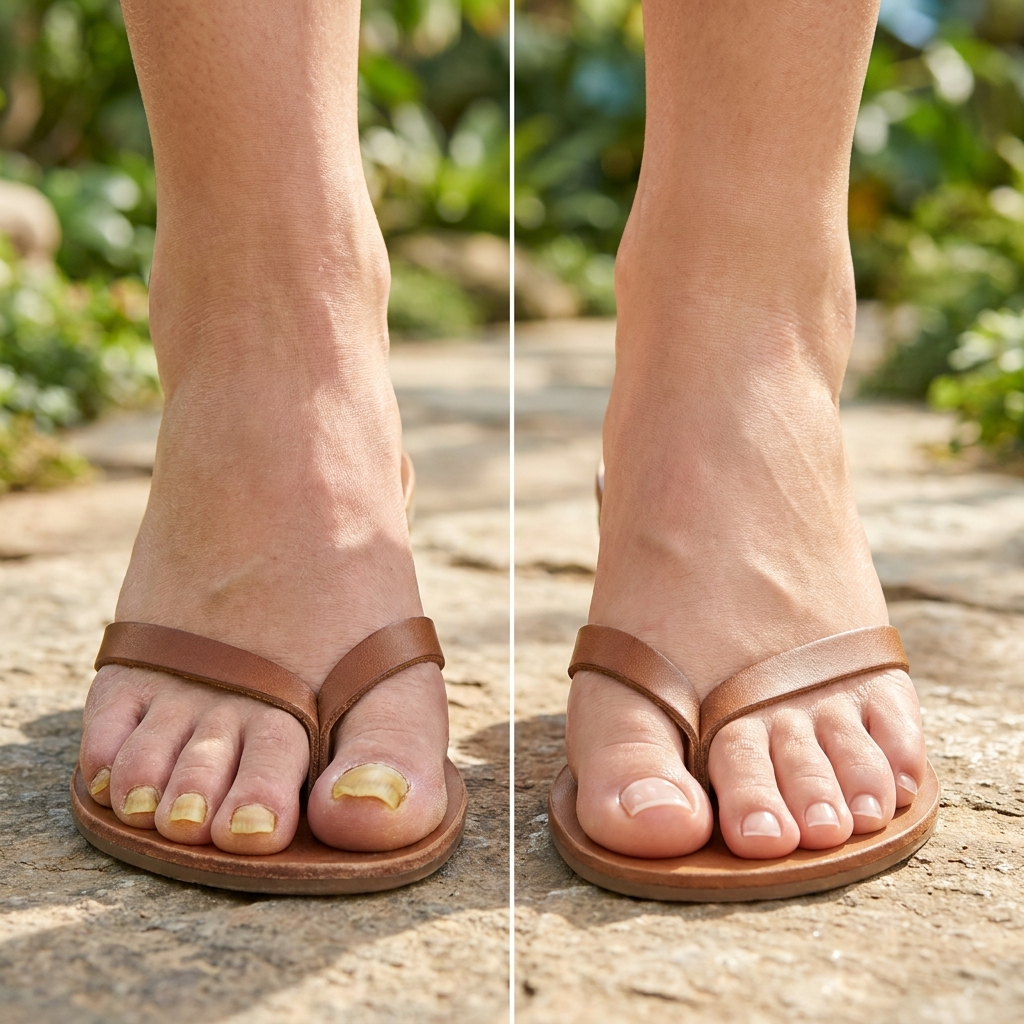
The treatment does not bleach or remove the nail. It does not produce an immediate cosmetic result. What it does is eliminate the active fungal infection so that as the nail grows out over the following months, healthy nail replaces the infected tissue. Full cosmetic clearance requires the nail to grow out completely — which takes 12-24 months for a great toenail — but the infection itself is being addressed from the first treatment session.
How Laser Compares to Oral Antifungals
| Factor | Oral Antifungals (Terbinafine) | Laser Treatment |
|---|---|---|
| Mechanism | Systemic — kills fungus via bloodstream | Local — thermal microscopic damage to fungal organisms through nail |
| Mycologic cure rate | 73% at 12 months | Variable by study; 80-88% range in quality trials |
| Treatment duration | 12 weeks of daily oral medication | 6 sessions over several months |
| Liver toxicity risk | Yes — baseline labs required | None |
| Drug interactions | Yes — review current medications | None |
| Appropriate for | Healthy patients without contraindications | Most patients including those who cannot take oral antifungals, patients who failed oral medications |
| Cosmetic result timeline | 12-24 months for full nail clearance | 12-24 months for full nail clearance |
Oral terbinafine remains an effective single treatment for onychomycosis in patients without contraindications. Laser treatment is not categorically superior — it is an appropriate alternative for patients who cannot take oral antifungals due to liver disease, drug interactions, or other medical contraindications, and for patients who prefer to avoid systemic medication. In moderate to severe cases, combining laser treatment with a prescription topical antifungal produces better outcomes than either alone.
What the Treatment Process Looks Like
At Momentum, laser treatment for toenail fungus begins with a clinical evaluation to confirm the diagnosis. Not all nail dystrophy is fungal — psoriasis, trauma, and other conditions can produce similar nail changes, and treating the wrong diagnosis wastes time and money. In cases where the diagnosis is uncertain, a nail sample is sent for lab confirmation before treatment begins.
Once the diagnosis is confirmed, treatment sessions are scheduled approximately 4–6 weeks apart. Each session involves passing the laser handpiece over all affected nails — the procedure takes 15–30 minutes. Patients feel a warming sensation during treatment; it is not painful for most people. There is no anesthetic, no downtime, and no wound care required afterward.
Most patients complete 6 sessions. Between sessions and after treatment is complete, keeping the nail environment hostile to reinfection matters: changing footwear regularly, treating shoes with antifungal spray, wearing moisture-wicking socks, and avoiding bare feet in communal areas like gyms and pools. Reinfection from the environment is a real risk, and patients who address it as part of their treatment plan have better long-term outcomes.
Realistic Expectations
The most common source of patient dissatisfaction with laser treatment is expecting cosmetic results too quickly. The laser addresses the infection — it does not instantly restore a normal-appearing nail. A thickened, discolored nail that has been infected for years does not look normal the week after treatment. What you should expect is that over the following months, as the nail grows out, the new growth coming in from the base is healthy and clear. The old infected nail moves distally and is trimmed away progressively. Full clearance is a 12-24 month process regardless of which treatment modality is used.
Patients who have been dealing with thickened, discolored toenails for years — often embarrassed to go barefoot or wear open-toed shoes — consistently report that they wished they had addressed it sooner once they see the nail growing out clean. The same attention to nail health that applies to onychomycosis applies to other nail conditions; patients managing recurring nail problems, including those who’ve dealt with ingrown toenails, often benefit from a comprehensive nail evaluation at the same visit.
Is Laser Treatment Covered by Insurance?
No. Laser treatment for onychomycosis is classified as cosmetic by insurance carriers and is not a covered benefit. Our office provides transparent pricing at the evaluation visit so there are no surprises. For patients who qualify medically for oral antifungals and have no contraindications, that remains a cost-effective first-line option worth discussing.
If you’ve been putting up with toenail fungus because prior treatments didn’t work or you’re not a candidate for oral medication, a consultation is the right starting point. We’ll confirm the diagnosis, assess the severity, and give you an honest treatment recommendation based on your specific situation — not a one-size approach.
Ready to address it?
✔ Schedule an evaluation at Momentum Foot & Ankle in Omaha
✔ We’ll confirm the diagnosis and walk you through your treatment options
✔ Call us or book an appointment online


Call Us Today: 402.315.4406