
You came in for an appointment, presented your insurance card, and left without paying anything beyond a copay — or nothing at all. Then, two or three months later, a bill arrives from our office. No explanation. No context. Just a balance due. If your first reaction was confusion or frustration, that’s completely reasonable. A bill arriving months after care was delivered looks like something went wrong. In most cases, nothing went wrong. What you’re seeing is the normal insurance claims cycle playing out on its actual timeline — which is almost never as fast as patients expect.
What Happens Between Your Appointment and Your Bill
The gap between your visit and your bill is not dead time. Here is what is actually happening during those weeks and months:
Step 1 — Claim submission. After your appointment, our office prepares and submits a claim to your insurance carrier. This claim includes the diagnosis codes that accurately reflect your condition and the procedure codes that reflect the care you received. Depending on the complexity of the visit and any documentation requirements, this typically happens within a few days to two weeks of your appointment.
Step 2 — Insurance processing. Your insurance carrier receives the claim and begins adjudication — the process of determining what they owe, what you owe, and whether the claim meets their coverage criteria. This process varies significantly by carrier. Some carriers process clean claims in two to three weeks. Others routinely take 45 to 60 days, and some take longer. During this window, your carrier may request additional documentation, apply the claim to your deductible, determine that the service requires prior authorization review, or pend the claim for reasons that have nothing to do with anything our office did.
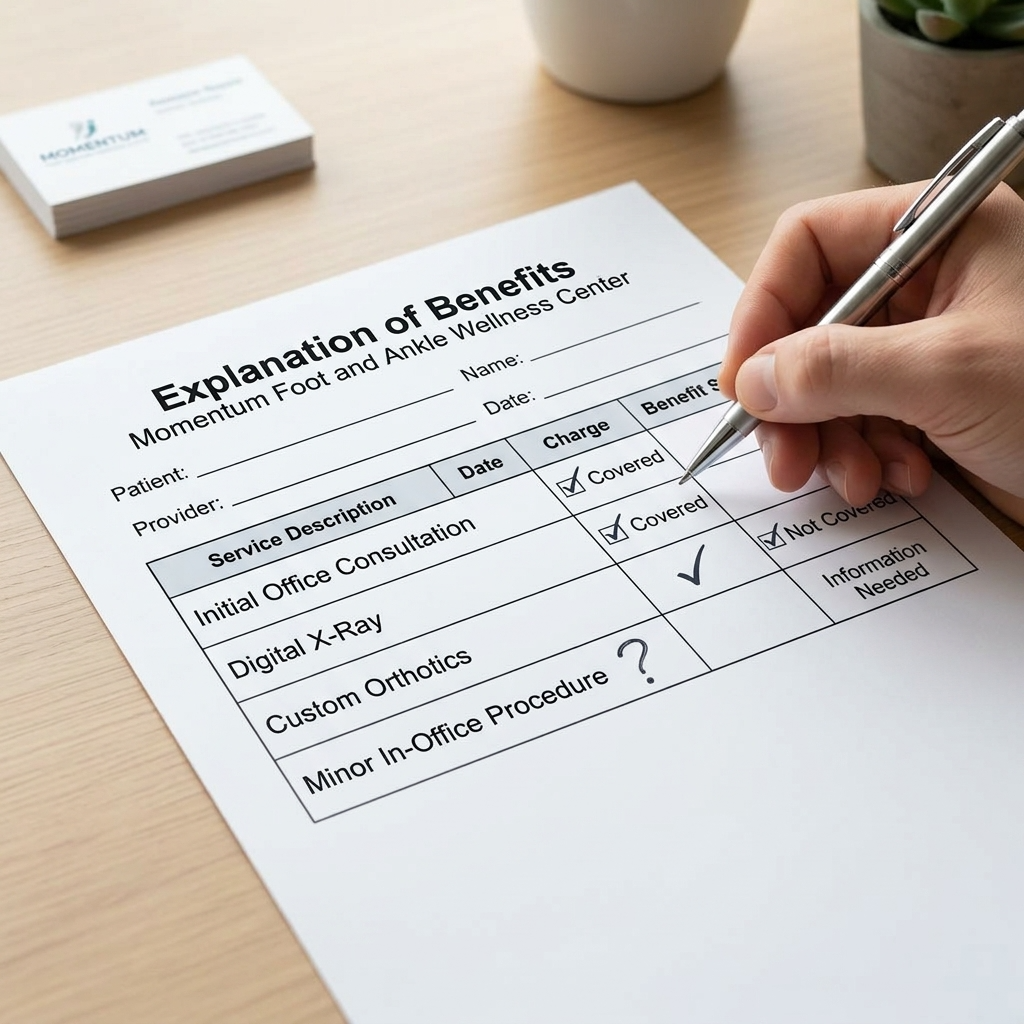
Step 3 — Explanation of Benefits. Once your carrier finishes processing, they issue an Explanation of Benefits (EOB) — a document sent to both you and our office that details how the claim was processed, what the carrier paid, what was adjusted off, and what portion is your responsibility. This is not a bill. It is an accounting of the decision your insurance carrier made.
Step 4 — Patient statement. After we receive the EOB and confirm the carrier has paid their portion, we generate a statement for any remaining balance — your deductible contribution, copay, or coinsurance. That statement is what arrives in your mailbox. By this point, 60 to 120 days have typically elapsed since your appointment. That timeline is normal.
The Most Common Reasons the Gap Is Longer Than Expected
While 60 to 120 days is standard, some claims take longer. The most common reasons:
- Your deductible reset at the start of the year: If you were seen in January or February, the portion of your deductible you had met was likely at zero. Claims processed early in the year are often applied entirely to the deductible, producing a larger patient balance than later-in-the-year visits where the deductible has been partially or fully met.
- Your carrier requested additional documentation: Some services — particularly those with medical necessity requirements — trigger a request from the carrier for clinical notes or supporting documentation before the claim is processed. This can add weeks to the timeline and is initiated by the carrier, not by our office.
- The claim was initially denied and appealed: Insurance carriers deny claims for a range of reasons, not all of them valid. When a denial is incorrect, our office appeals it on your behalf. That process takes time, and billing you for a balance before the appeal is resolved serves no one. We wait for the appeal outcome before issuing a patient statement.
- Coordination of benefits between multiple insurance plans: Patients with primary and secondary insurance coverage require claims to be processed sequentially — primary first, secondary after. The secondary carrier cannot process until the primary has finalized. This adds another full processing cycle to the timeline.
- Carrier processing backlogs: Some carriers are simply slow. This is not something our office controls, and it is not a reflection of an error on our end.
What the Bill Actually Represents
The balance on your statement is your portion of the cost of care as determined by your insurance plan — not a number our office invented. It reflects one or more of the following:
- Deductible: The amount you’re required to pay out of pocket before your insurance begins covering costs. Until your deductible is met, claims are applied to it at the contracted rate — not the full billed charge.
- Copay: A fixed amount your plan requires you to pay for specific visit types, regardless of what else is billed.
- Coinsurance: Your percentage share of the cost after the deductible is met. If your plan has 20% coinsurance, you owe 20% of the allowed amount after your deductible has been satisfied.
- Non-covered service: Some services are not covered benefits under your specific plan. When a service is excluded from coverage, the patient is responsible for the cost. Our office will make every effort to identify non-covered services in advance, but coverage determinations are ultimately made by your carrier after the claim is submitted — and they do not always align with what a benefits representative told you on the phone.
What to Do When the Bill Arrives
First, compare it to your Explanation of Benefits. Your EOB will have arrived from your insurance carrier separately — either by mail or through your carrier’s online portal — and it will show the same figures that appear on our statement. If the numbers match, the statement reflects what your carrier determined you owe. If they don’t match, call our office before paying anything.
Second, if the balance is larger than you expected, call our office. There are legitimate reasons a balance may be higher than anticipated — a deductible that was further from being met than you realized, a service that processed as non-covered — and there are also errors that do occasionally occur in claims processing, on our end or the carrier’s. We would rather you call and ask than assume the bill is wrong and ignore it, or assume it’s right and pay something you don’t owe.
Third, if you are unable to pay the full balance at once, call us. We work with patients on payment arrangements. A bill arriving months after a visit is already a stressful experience — we have no interest in making it worse.
What a Late Bill Does Not Mean
It does not mean our office forgot about you and is now catching up. It does not mean something was billed incorrectly. It does not mean your insurance denied your claim. It does not mean you were charged for something you didn’t receive. In the vast majority of cases, a bill arriving 60 to 120 days after your appointment means the insurance claims process ran its normal course and your carrier has now told us what your share is. That’s it.
If you have questions about a statement from Momentum Foot & Ankle, call our office directly. We’ll walk through it with you.
✔ Questions about a bill? Call us at 402.315.4406
✔ Need to schedule or have a clinical question? Book an appointment online


Call Us Today: 402.315.4406